Scientists and engineers working with high-temperature materials now have a better option for tensile testing of refractory alloys. Boron nitride ceramic tubes are proving to be ideal as core tubes in these demanding applications. These tubes handle extreme heat without breaking down or reacting with the test samples.
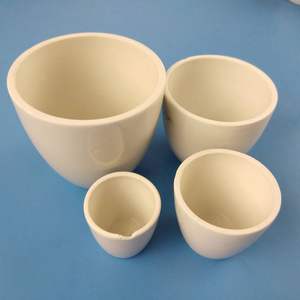
(Boron Nitride Ceramic Tubes for Core Tubes in High Temperature Tensile Testing of Refractory Alloys)
Refractory alloys must be tested at temperatures above 1,500°C to understand how they behave under stress. Standard metal fixtures often fail or contaminate results at such heat levels. Boron nitride stays stable and inert even past 2,000°C. This makes it perfect for holding alloy specimens during testing.
The smooth surface of boron nitride also prevents sticking or unwanted bonding with molten or semi-molten metals. Its low thermal expansion means the tube keeps its shape when heated quickly. That helps keep test data accurate and repeatable.
Manufacturers report fewer failed tests since switching to boron nitride core tubes. Labs see cleaner breaks in samples and more consistent stress-strain curves. The material is machinable too, so custom sizes and shapes are easy to produce.
Demand for these ceramic tubes is growing in aerospace, energy, and advanced manufacturing sectors. Companies developing next-generation jet engines or nuclear components rely on precise high-temperature data. Boron nitride gives them confidence in their measurements.
Suppliers are scaling up production to meet this need. They offer tubes in various diameters and lengths, all made to tight tolerances. Quality control includes checks for purity and density to ensure performance under real-world conditions.
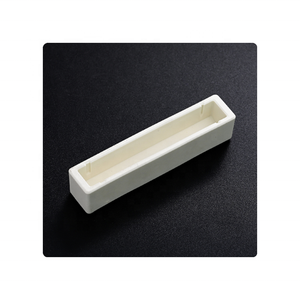
(Boron Nitride Ceramic Tubes for Core Tubes in High Temperature Tensile Testing of Refractory Alloys)
Researchers say the shift to boron nitride has removed a major bottleneck in materials testing. It lets them push experiments to higher temperatures safely and reliably.